
Xylan® coating
Fluoropolymer coating from the PPG line, applied by spray. Xylan 1070 has a 15 to 25 µm layer and a dynamic friction of 0.047 in ASTM G99.
Used as a standalone coating or as a top layer over zinc-nickel or NanoGalv®, adding a chemical barrier and friction control to the metallic layer. Typical use: stud bolts, valve systems and other threaded components. Sapucaia is a PPG (Whitford) approved applicator of Xylan.
Xylan® is not an off-the-shelf product. The line is supplied only to those the manufacturer qualifies, and that qualification is what separates whoever applies from whoever merely buys: without it there is no product, and no coated part to deliver. The partnership with PPG — formerly Whitford — began in 2021, and the approval came after a process audit by the manufacturer itself. It is one of the three approvals Sapucaia holds, and the only one granted by a coating manufacturer.
Xylan® is a family, not a single product. Almost all formulations carry PTFE or another solid lubricant and are applied as a thin film, but what changes between them — water or solvent base, temperature range, hardness, pressure supported — is what decides which one suits your part. That is why the choice is made by service condition, not by line number.
The four properties the family delivers are lubrication and friction control, wear resistance, non-stick behavior when the fastener is removed, and corrosion protection. In a flange threaded joint, the third is often worth as much as the fourth: the stud that does not seize is what allows the equipment to be taken apart at the planned shutdown.
Applied over zinc-nickel or NanoGalv®, the fluoropolymer adds a chemical barrier and controlled friction to the sacrificial galvanic protection. The complete system has its own page, with the designation and the friction argument: see the Zn-Ni + PTFE system.
Note: For references 1014 and 1424, our sales team indicates the right option according to your end customer’s standard — the data sheets published here are for the references with a test or manufacturer data behind them.
Technical data
- Chemistry
- Fluoropolymer
- Application
- Spray
- Layer (1070)
- 15 to 25 µm
- Service temperature (1070)
- −195 °C to +260 °C
- Static friction (1070)
- 0.124 · ASTM G99
- Dynamic friction (1070)
- 0.047 · ASTM G99
- Lines
- 1070 · 1425 · 1014 · 1424
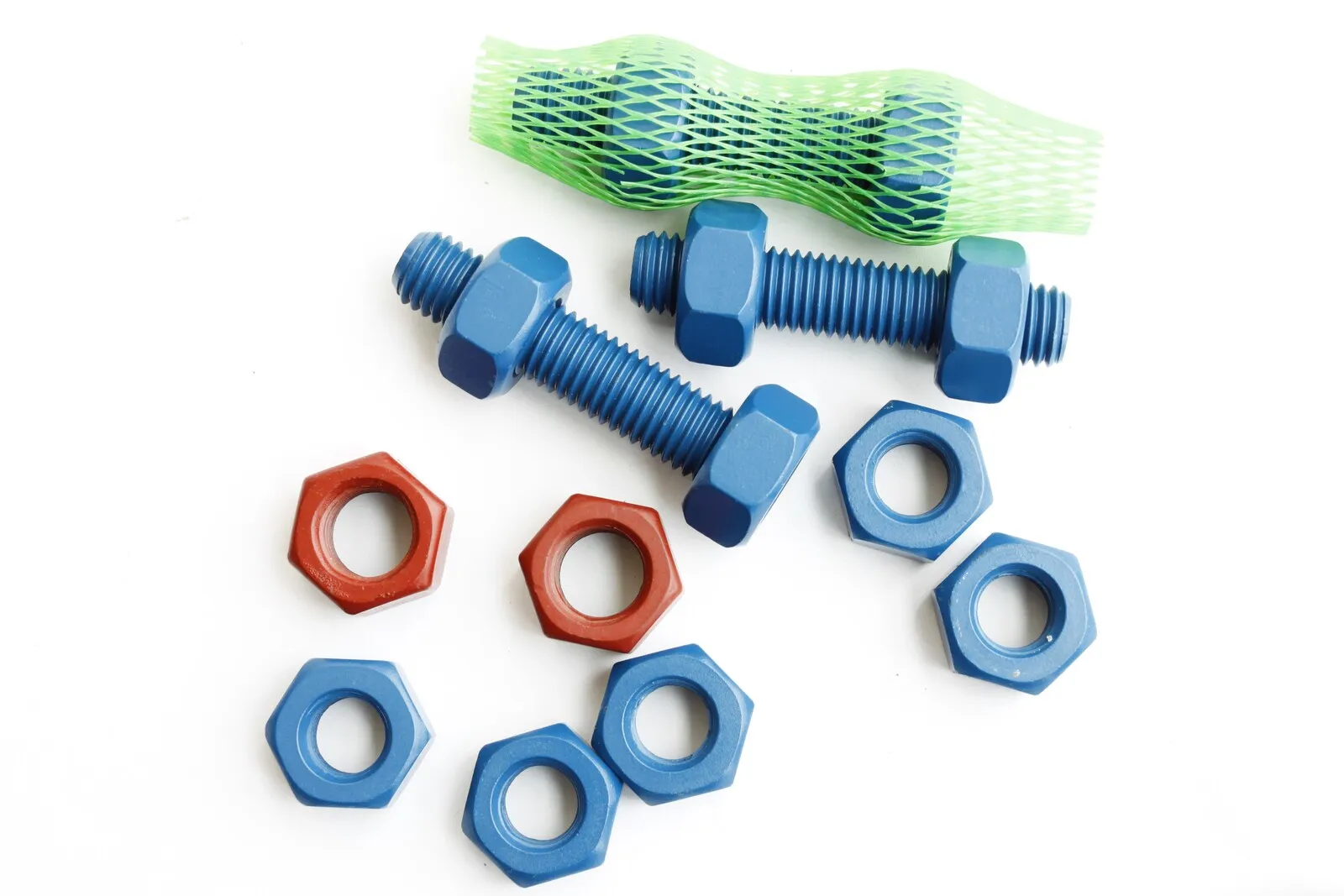
What each standard sets for Xylan®.
The chip at the top of the page names the standard. This table says what it requires — which is what the specifier checks before closing the drawing.
| Standard | What it covers | What it sets here |
|---|---|---|
| ASTM G99 | Test method | Wear and friction by pin on disk. It is the method behind the static and dynamic coefficients published on the 1070 data sheet. |
| ASTM B117 | Test method | Neutral salt spray — the method of the hours published for systems with a top coat. |
| DIN 50018 | Test method | Kesternich: atmosphere with sulfur dioxide, in cycles. An industrial-environment test, complementary to salt spray. |
| Petrobras N-215 | Operator specification | Zinc, zinc-nickel and PTFE on oil and gas components. |
The applications that come here.
Flange studs and stud bolts
Where the problem is not only corroding: it is seizing. The solid-lubricant film keeps torque predictable at assembly and allows disassembly at shutdown.
Valves and wellhead components
A chemical barrier against production fluid and hydraulic fluid, with a temperature range declared per line.
Equipment and structure
Equipment painting with PTFE Sapucaia, the company’s own line, for assemblies that fit neither a rack nor a barrel.
System over a metallic layer
As a top layer over zinc-nickel or NanoGalv®, when the specification calls for galvanic protection and an organic barrier on the same component.
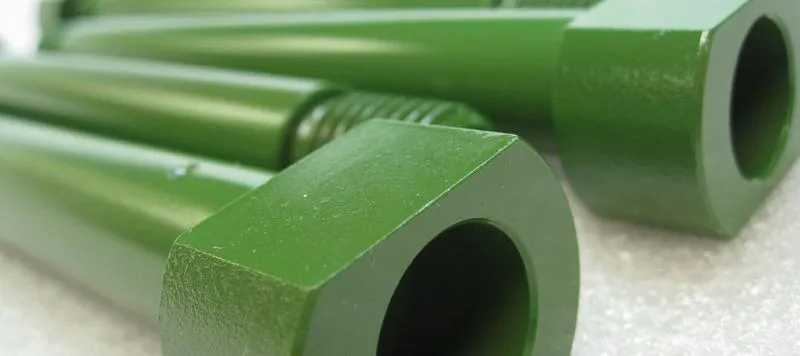
In a combined system, performance does not add up — it multiplies.
The zinc-nickel system with a fluoropolymer finish for oil and gas has its own page, with the full ASTM B841 designation, the friction argument and what the test hours do not say — see the Zn-Ni + PTFE system.
| Metallic base | Organic layer | Salt spray | Remarks |
|---|---|---|---|
| NanoGalv® | Xylan® | High resistance | The top of the portfolio’s protection: to the nanolaminated barrier, Xylan® adds chemical resistance to the medium and predictable friction in the joint. For your asset, our sales team sizes the system and states the applicable test. |
| Zinc-nickel | Xylan® 1070 · solvent-based · 16 µm | over 3,500 h Sapucaia technical data | Working range from −195 °C to 260 °C — the widest in the line. More than three and a half times zinc-nickel alone, with friction control added. |
| Zinc-nickel | Xylan® 1424 · water-based · 16 µm | over 3,500 h performance specified by Sapucaia | Working range from −20 °C to 180 °C. Water-based, for process components where the chemical inertness of the fluoropolymer is the requirement. |
Variations of this line.
Xylan 1070
The Xylan line with a complete, verified specification: measured friction, a wide thermal range and use as a top coat over zinc-nickel.
Xylan 1425
Water-based coating with dual PTFE and MoS₂ lubrication, for high pressure at low speed and continuous service from −50 °C to +175 °C.
Xylan 1014
The PPG line reference for lubricity, applied where the part must withstand corrosion, abrasion, temperature and chemical attack at the same time.
Xylan 1424
High-performance fluoropolymer resin, anticorrosive and non-stick, with chemical and thermal resistance for a working range of −20 °C to 180 °C.
What specifiers usually ask.
What is the difference between the Xylan® lines?
The service condition. The 1070 is solvent-based and works from −195 °C to 260 °C; the 1425 is water-based, with dual PTFE and MoS₂ lubrication, and is indicated for high pressure at low speed; the 1424 is water-based for a more moderate range. The choice is made by temperature, pressure and the fluid in contact, not by number.
Does Xylan® replace the metallic coating?
In some cases, yes — and in oil and gas, usually not. The fluoropolymer is a barrier: it protects while the film is intact. The metallic layer is sacrificial galvanic protection: it keeps protecting the steel at a point where the layer has been damaged. That is why a critical specification usually asks for both, as a system.
Is Sapucaia approved to apply Xylan®?
Yes, by PPG (formerly Whitford), since 2021, for the XYLAN® and XYLAR® line. And that is what the qualification unlocks: the line is supplied only to an applicator qualified by the manufacturer, after a process audit — without it you cannot buy the product or supply the part coated with it. It is the same requirement that Petrobras specification I-ET-3010.00-1200-251-P4X-001 makes, in §5.3.4.4, for fluoropolymer on FPSO bolts. Distinct from an OEM approval, which Sapucaia holds with TechnipFMC for cadmium.
What fluoropolymer thickness is applied?
It depends on the line and the system. In the system with zinc-nickel, the top coat goes on at 16 µm over a base of 8 to 15 µm. Applied as a standalone coating, the 1070 line sits between 15 and 25 µm, and the manufacturer recommends 20 to 30 µm for the 1425.