
Fastener coating for oil and gas
Coating for fasteners and components exposed to marine atmosphere, refineries and pipelines, with an auditable process and compliance with Petrobras standards.
A corroded fastener forces a maintenance shutdown — and the shutdown costs more than the part.
In oil and gas the coating is rarely chosen alone: what gets specified is a system. The metallic base gives sacrificial galvanic protection, which keeps working where the layer was damaged during assembly; the organic layer on top gives a chemical barrier against production and control fluids and friction control on the thread. One does not replace the other.
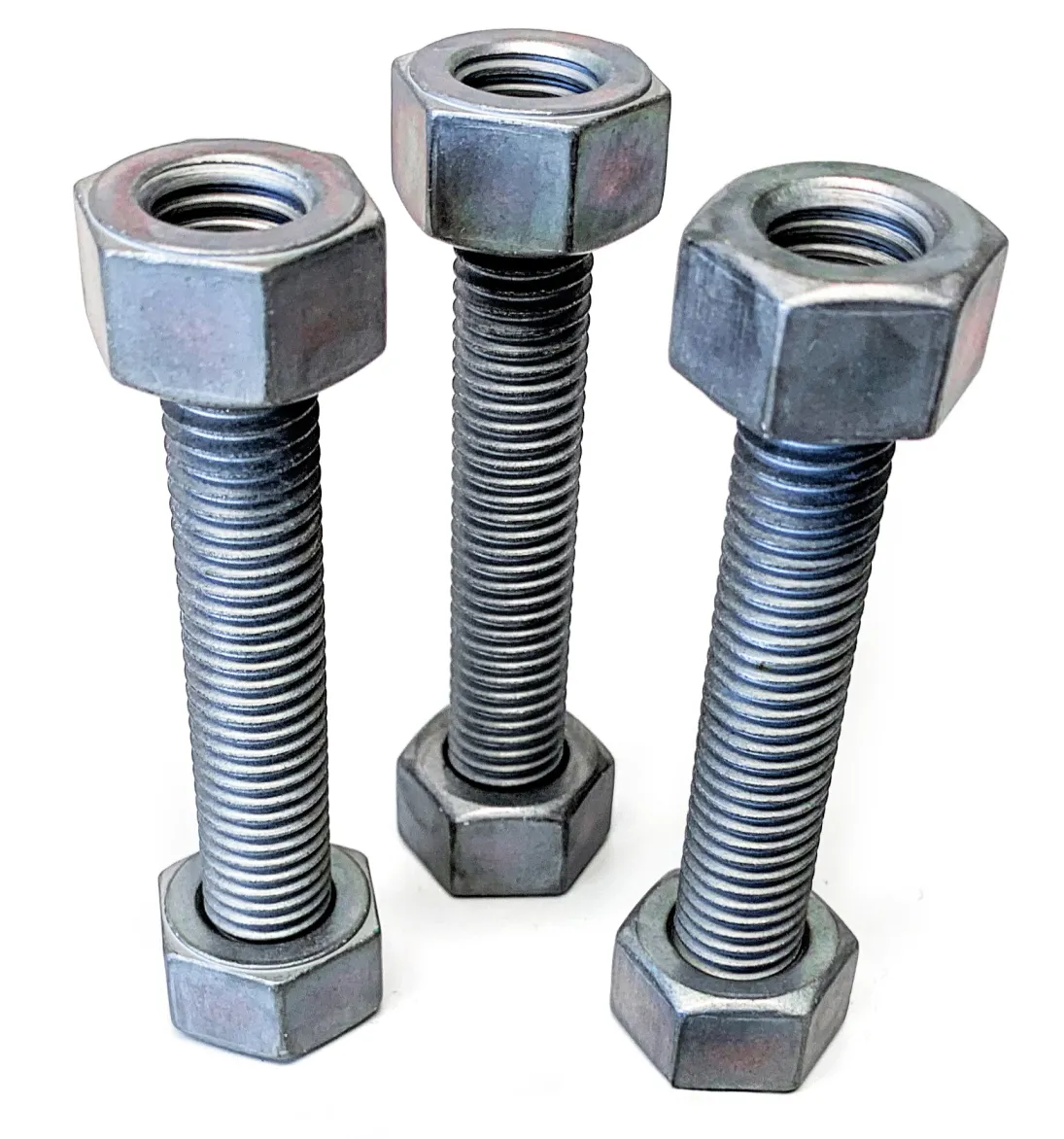
The assembly that arrives most often is the flange stud with its nuts — threaded rod and heavy nut treated together, so the pair tightens to the intended torque. This is where friction stops being a finishing detail and becomes a design variable: the calculated preload is only achieved if the coefficient is the expected one.
The portfolio’s protection ladder runs from cadmium and zinc-nickel, in the range of 900 to 1,000 h of salt spray, up to NanoGalv® above 10,000 h at 10 µm. Between the two ends sit the combined systems, above 3,500 h with any of the top coats. Every number here comes with thickness, system and data source.
For high-hardness fasteners, none of this holds without hydrogen relief done right after plating, in an oven with a uniformity survey — which is what hydrogen embrittlement relief delivers, and it is the record that an API Specification 6A audit asks to see.
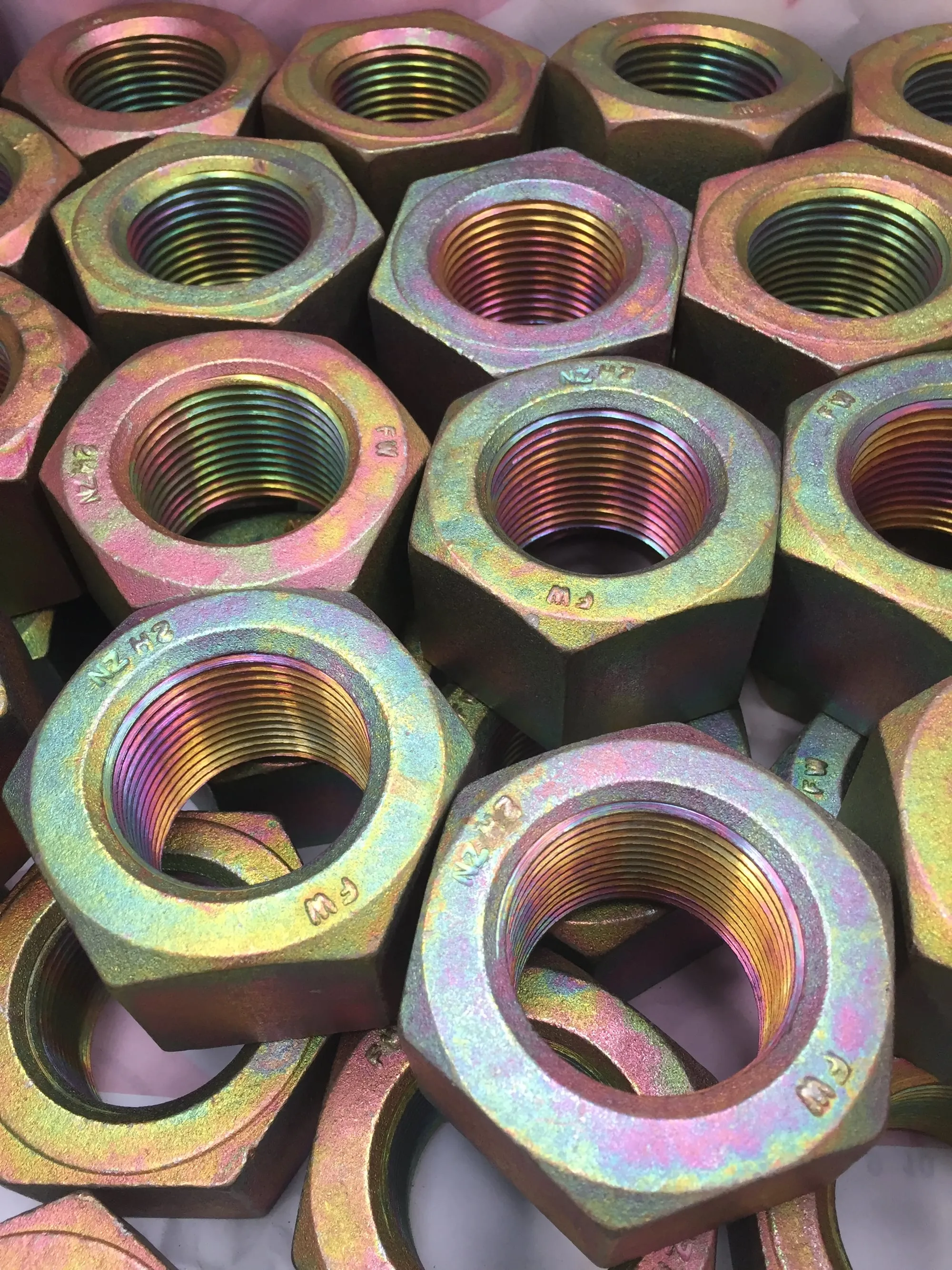
What we apply in this sector.
Zinc-nickel with PTFE
ASTM B841 class 2 with a fluoropolymer finish: a corrosion barrier and a controlled friction coefficient, for predictable preload on the fastener.
NanoGalv®
Nanostructured zinc-nickel to ASTM B1025-25, which passes 10,000 hours of salt spray to red rust at 10 µm in Modumetal’s ASTM B117 test.
Cadmium
Electrolytic cadmium plating to ASTM B766 class 12 type II, with 1,000 hours of salt spray in an ASTM B117 report from an ISO/IEC 17025 accredited test.
Zinc-nickel
Zinc-nickel to ASTM B841 and ISO 4042, with a 12 to 16% nickel alloy and resistance above 1,000 hours of salt spray, controlled by X-ray.
Xylan®
Fluoropolymer coating from the PPG line, applied by spray. Xylan 1070 has a 15 to 25 µm layer and a dynamic friction of 0.047 in ASTM G99.
Molybdenum disulfide (MoS₂)
Resin-bonded molybdenum disulfide solid lubricant, applied by spray on fasteners and threaded components to control tightening friction.
Hydrogen embrittlement relief
Hydrogen-relief heat treatment between 150 °C and 250 °C, immediately after galvanic coating, in ovens calibrated to API 6A.
We work against your end customer’s specification.
Tell us the standard and we recommend the system.
| Source | Specification | Subject |
|---|---|---|
| Petrobras | I-ET-3010.00-1200-251-P4X-001 | Fastener coating |
| Petrobras | N-215 | Zn, Zn-Ni and PTFE |
| Saudi Aramco | 09-SAMSS-107 | Fastener coating |
| ExxonMobil | GP 56-02-13 | Fastener coating |
| Shell | DEP 30.48.00.32 | Fastener coating |
| API | 20E / 20F | Fasteners for oil & gas and subsea |
| API | Specification 6A | Oven calibration |
What specifiers usually ask.
Which coating should I specify for offshore fasteners?
It depends on the asset’s horizon and the project standard. For severe service with expensive inspection, NanoGalv® passes 10,000 h of salt spray at 10 µm. For a current requirement, zinc-nickel with a fluoropolymer finish is above 3,500 h. Where the standard still specifies cadmium, cadmium is applied to ASTM B766 class 12 type II.
Why does friction control matter on a flange stud?
Because joint preload is calculated from torque, and torque only becomes the intended force if the friction coefficient is the expected one. A coating without friction control makes the same wrench deliver a different load on each stud — and a joint with uneven preload leaks or fatigues.
Does Sapucaia meet Petrobras standards?
Yes, and the short way to check is this: Petrobras coating specifications converge on the same ASTM standards, and we apply all four — in the class, type and grade your order determines. They are ASTM B766 for cadmium, ASTM B841 for zinc-nickel, ASTM B633 for zinc and the fluoropolymer for our PTFE line and for Xylan®; heat treatment follows ASTM B849 and ASTM B850. That is why N-215 and I-ET-3010.00-1200-251-P4X-001 rev. F are met, and so are those of other operators — Saudi Aramco 09-SAMSS-107, ExxonMobil GP 56-02-13 and Shell DEP 30.48.00.32. Meeting an operator’s specification is not the same as being on its approved-supplier list.