
Manganese phosphate
The porous layer retains oil and keeps two steel parts in sliding contact from seizing during break-in.
Manganese phosphate forms a porous layer that retains lubricant. In a mechanical pair with sliding contact — gear, cam, pin — this prevents galling and seizing during break-in.
As a conversion coating, the layer of crystalline phosphates is born from the reaction of phosphoric acid with the steel itself, not from deposition on it. From that come the other three properties the process delivers: high chemical insulation, low open porosity and a barrier to the transmission of electric current between parts.
Initial cleaning is part of the process, not optional preparation: degreasing and pickling remove machining oil and oxide, and without them the crystal does not nucleate evenly. It is the same step that makes it possible to recover a part already in service, returning the surface to the state in which it accepts treatment.
The line handles iron and steel, including heavy shafts over two meters long — a dimension that is usually the practical limit for those who outsource phosphating.
Technical data
- Function
- Break-in · oil retention · anti-galling
- Type
- Conversion coating
- Substrates
- Iron and steel
- Length handled
- Shafts over 2 m
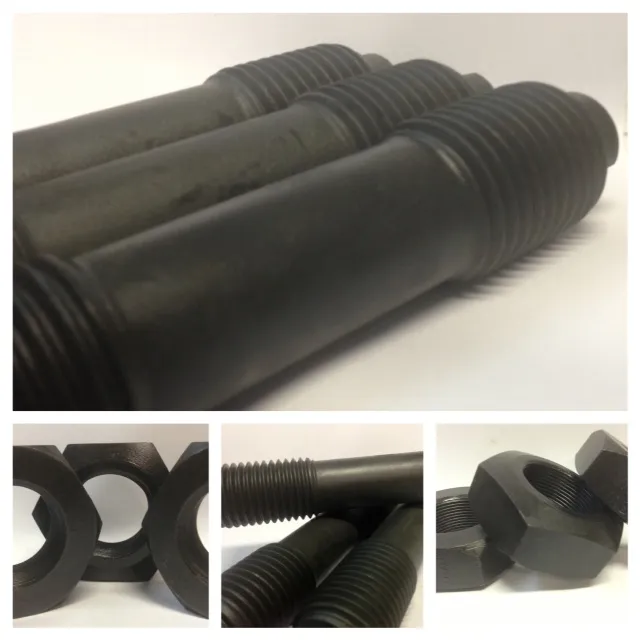
The applications that come here.
Sliding pair during break-in
Gear, cam and pin, where the porous layer holds oil on first contact.
Heavy shaft
Long part, over two meters, that does not fit an ordinary phosphating line.
Electrical insulation
Where the design must prevent current transmission between parts in contact.