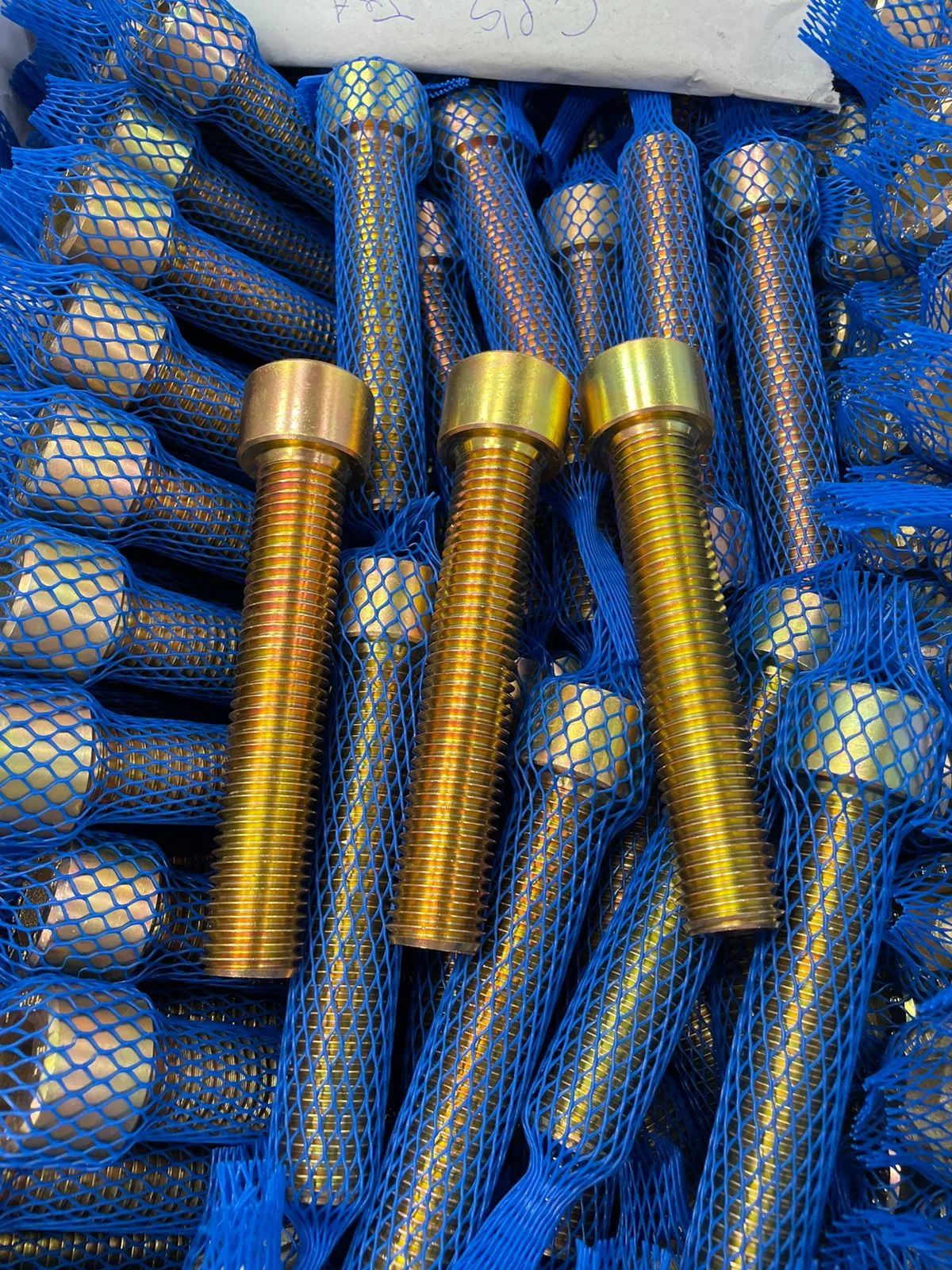
Cadmium yellow chromate
The historical reference coating for critical fasteners in marine environments: 1,000 hours to red rust, in accredited testing.
A uniform layer with natural lubricating properties, high resistance to galvanic corrosion and good torque-tension behavior in a threaded joint. For galvanic compatibility with aluminum, cadmium remains the reference — it is regulated, not superseded.
Restricted in the European Union since 1991, with exemptions kept for offshore, nuclear and aerospace. Where the standard allows a substitute, we lead the migration to zinc-nickel or NanoGalv® — we apply all three, so the conversation is technical, not commercial.
Technical data
- Standard
- ASTM B766 · class 12, type II
- Thickness (O&G practice)
- 12 µm
- Salt spray
- 1,000 h · ASTM B117
- Test report
- ISO/IEC 17025 accredited test
- Approval
- TechnipFMC
What each standard sets for Cadmium yellow chromate.
| Standard | What it covers | What it sets here |
|---|---|---|
| ASTM B766 | Coating specification | Class 12, type II. Class defines the minimum thickness; type defines the chemical finishing conversion. It is the designation that applies in oil and gas. |
| ASTM B117 | Test method | Neutral salt spray — the method behind the 1,000 h report. A test method does not replace a coating specification: B117 without B766 specifies nothing. |
| ASTM B849 | Stress relief, before plating | Heat treatment ahead of the coating. The standard and class come from the customer’s specification — it is the step Petrobras cites together with B850. |
| ASTM B850 | Hydrogen embrittlement relief | Post-coating heat treatment to reduce the risk of embrittlement in high-strength steel. |
| Petrobras N-215 | Operator specification | Coating requirements for components in oil and gas service. |
The applications that come here.
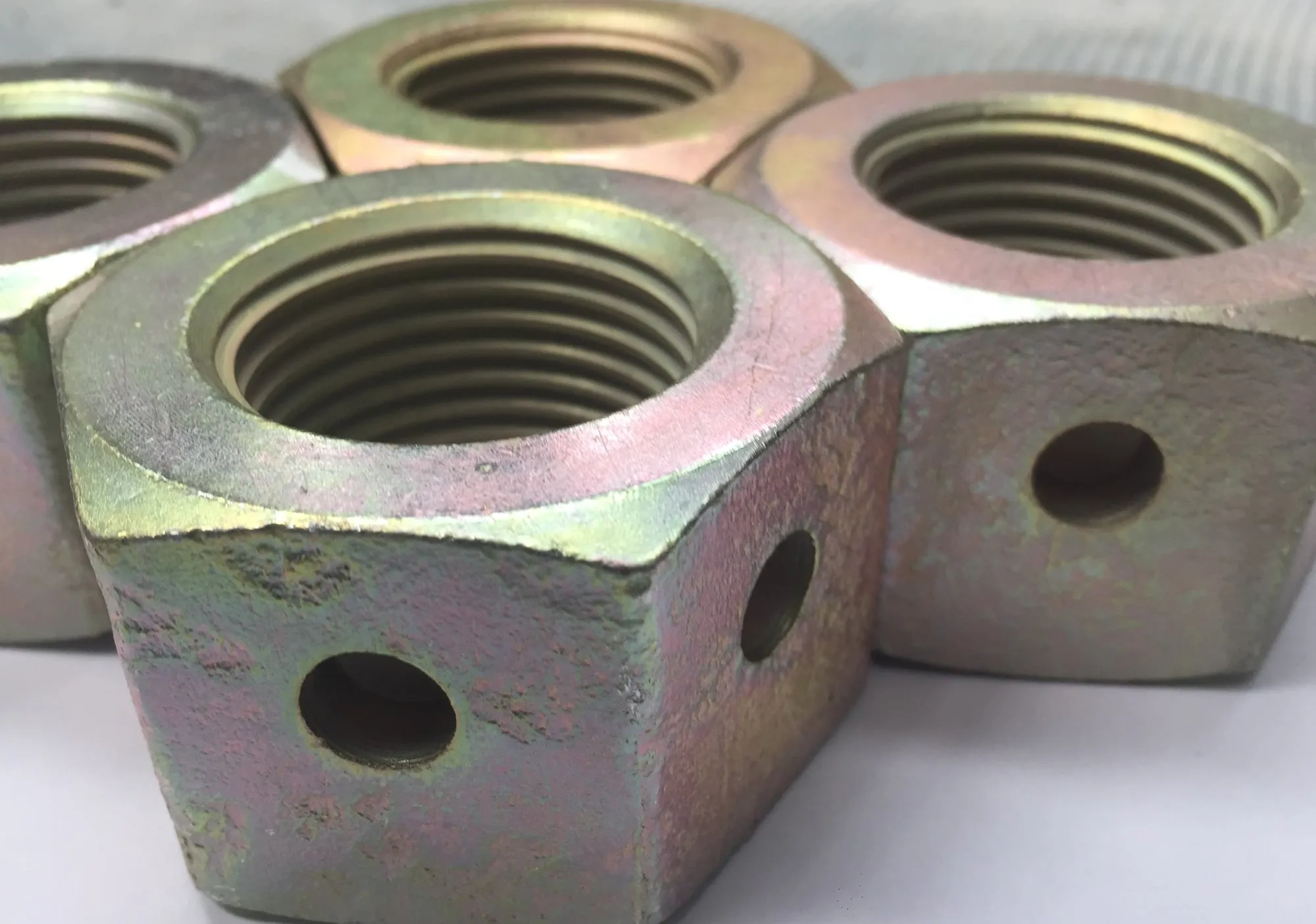
Subsea fasteners
Studs, nuts and bolts of subsea equipment, where the standard still specifies cadmium.
Calculated threaded joint
Where preload depends on a predictable friction coefficient — the natural lubricity of the layer is what makes torque repeatable.
Assembly with aluminum
Assembly in light alloy, for galvanic compatibility: swapping the coating without a study can move the corrosion to the structure.
What specifiers usually ask.
What is the complete designation of yellow chromate cadmium?
ASTM B766 class 12 type II, with 12 µm thickness in oil and gas practice. The same designation applies to the olive drab finish — what changes is the color of the conversion, not the class or the type.
What proof goes with the lot?
An ASTM B117 salt-spray report with 1,000 hours to red rust, from ISO/IEC 17025 accredited testing, and the record of measured thickness. The method is written next to the number because hours without a method specify nothing.
Is hydrogen embrittlement relief needed after cadmium?
For high-strength steel, yes, immediately after plating. The process is electrochemical and generates hydrogen that diffuses into the metal; thermal relief is what prevents brittle fracture weeks after assembly.