Automotive fastener plating
Zinc-nickel and alkaline zinc with trivalent passivation and a friction-coefficient modifier, with PPAP and CQI-11 readiness.
OEM standard, tight lead time and an alloy that must be within range on every lot.
We meet in full the coating specifications of the main OEMs — among them Volkswagen, Stellantis, Peugeot, Citroën, General Motors, Renault, Nissan and Fiat (PS50031) — with dedicated zinc-nickel and alkaline zinc lines and the passivations and sealers those standards require.
The umbrella standard of the segment is DIN 50979, and trivalent passivation replaced hexavalent by legal requirement, eliminated in European automotive on July 1, 2007. With a sealer, trivalent reaches equivalent or superior performance — the change cost no protection.
What automotive asks for beyond the coating is predictability: PPAP with a control plan and capability study, alloy measured by X-ray in process and not only at final inspection, and readiness for a CQI-11 plating assessment. A lot that varies in alloy is a lot that passes inspection and fails in the field.
The friction-coefficient modifier comes in where the OEM specifies torque-tension in a narrow range. We work with the sealer and lubricant systems from MacDermid, supplier of the house zinc-nickel process.
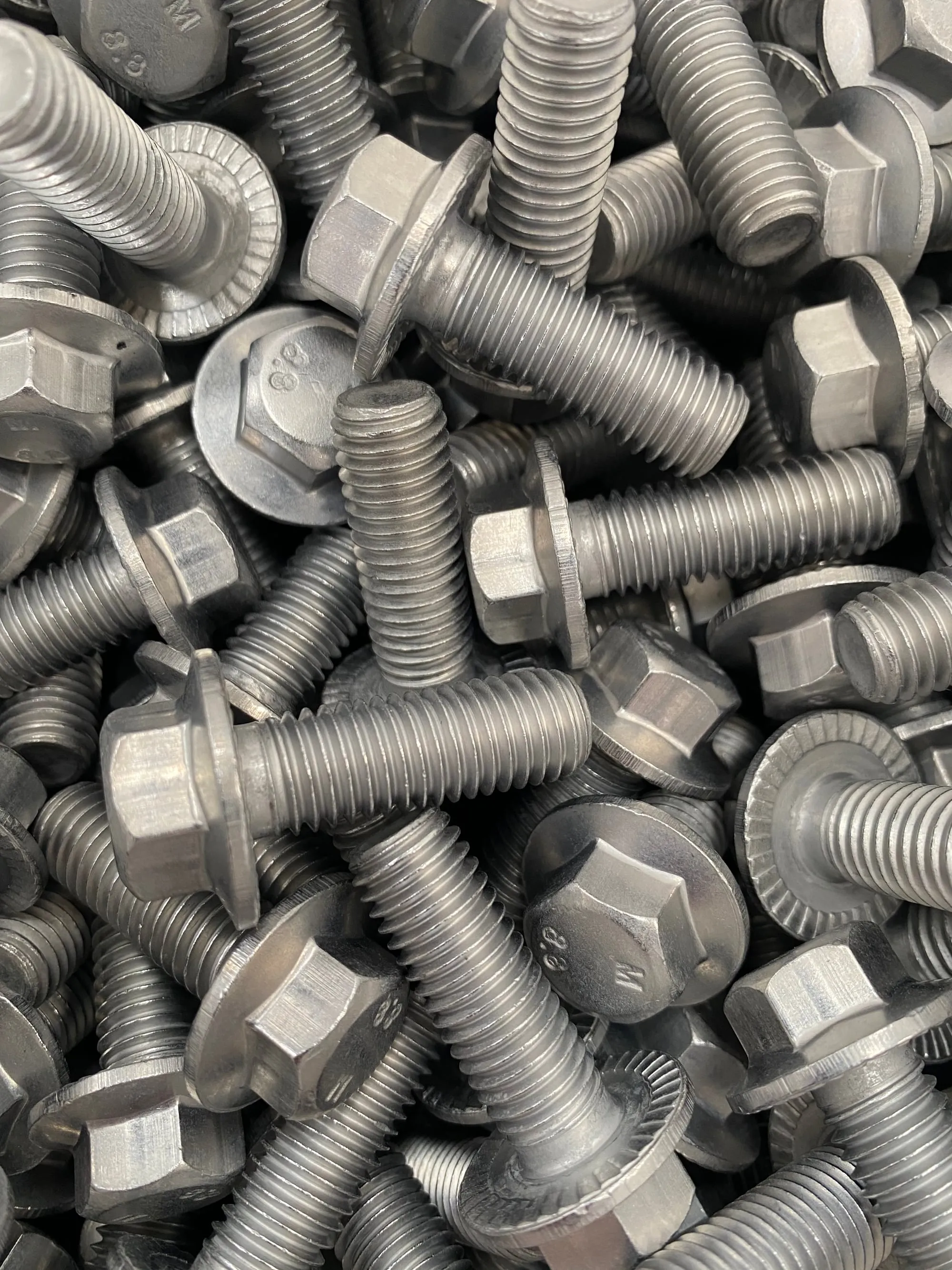
What we apply in this sector.
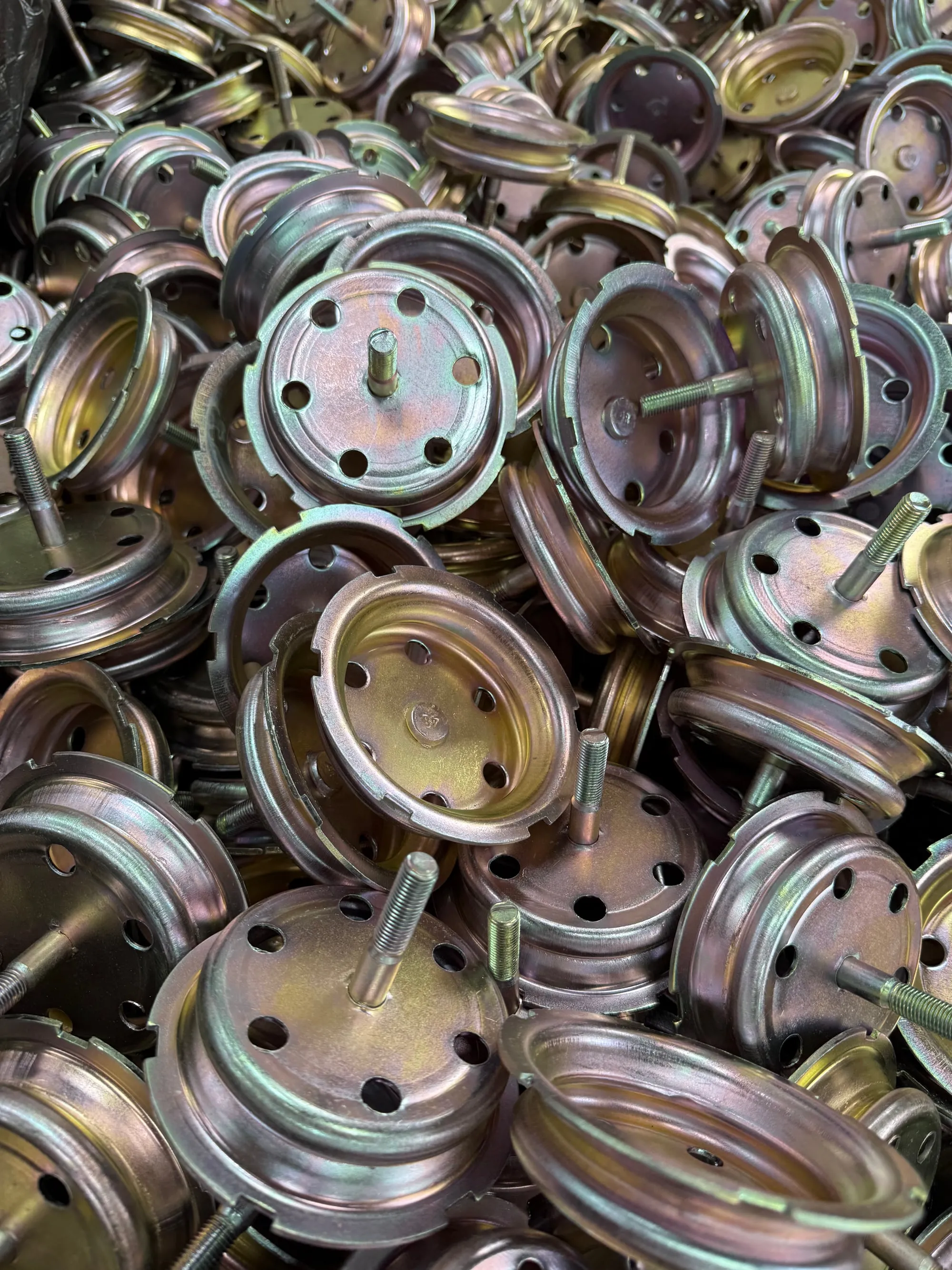
Zinc-nickel
Zinc-nickel to ASTM B841 and ISO 4042, with a 12 to 16% nickel alloy and resistance above 1,000 hours of salt spray, controlled by X-ray.
Alkaline zinc
Alkaline zinc bath for general corrosion protection, with trivalent passivation and friction-coefficient modifiers.
Phosphate
Zinc and manganese phosphating, as an adhesion pre-treatment for paint and as a break-in and friction-reducing layer.
Hydrogen embrittlement relief
Hydrogen-relief heat treatment between 150 °C and 250 °C, immediately after galvanic coating, in ovens calibrated to API 6A.
What specifiers usually ask.
Does Sapucaia support PPAP?
Yes. The production part approval package comes with a control plan, capability study and the process records — among them the alloy measurement by X-ray fluorescence taken during production, which is the data the automotive chain asks for most on zinc-nickel.
What is the difference between CQI-9 and CQI-11?
They are different AIAG process assessments. CQI-9 covers heat treatment, and governs the oven, the instrument and the record used in hydrogen embrittlement relief. CQI-11 covers plating, and assesses the coating line. Confusing the two in a purchase requirement is common and costly.
Alkaline zinc or zinc-nickel for an automotive part?
By service environment. Alkaline zinc suits sheltered-atmosphere parts at production volume, in the range of 200 to 300 h of salt spray. Zinc-nickel comes in where there is salt, permanent humidity or a European OEM requirement: the base runs from 900 to 1,000 h at equivalent thickness.