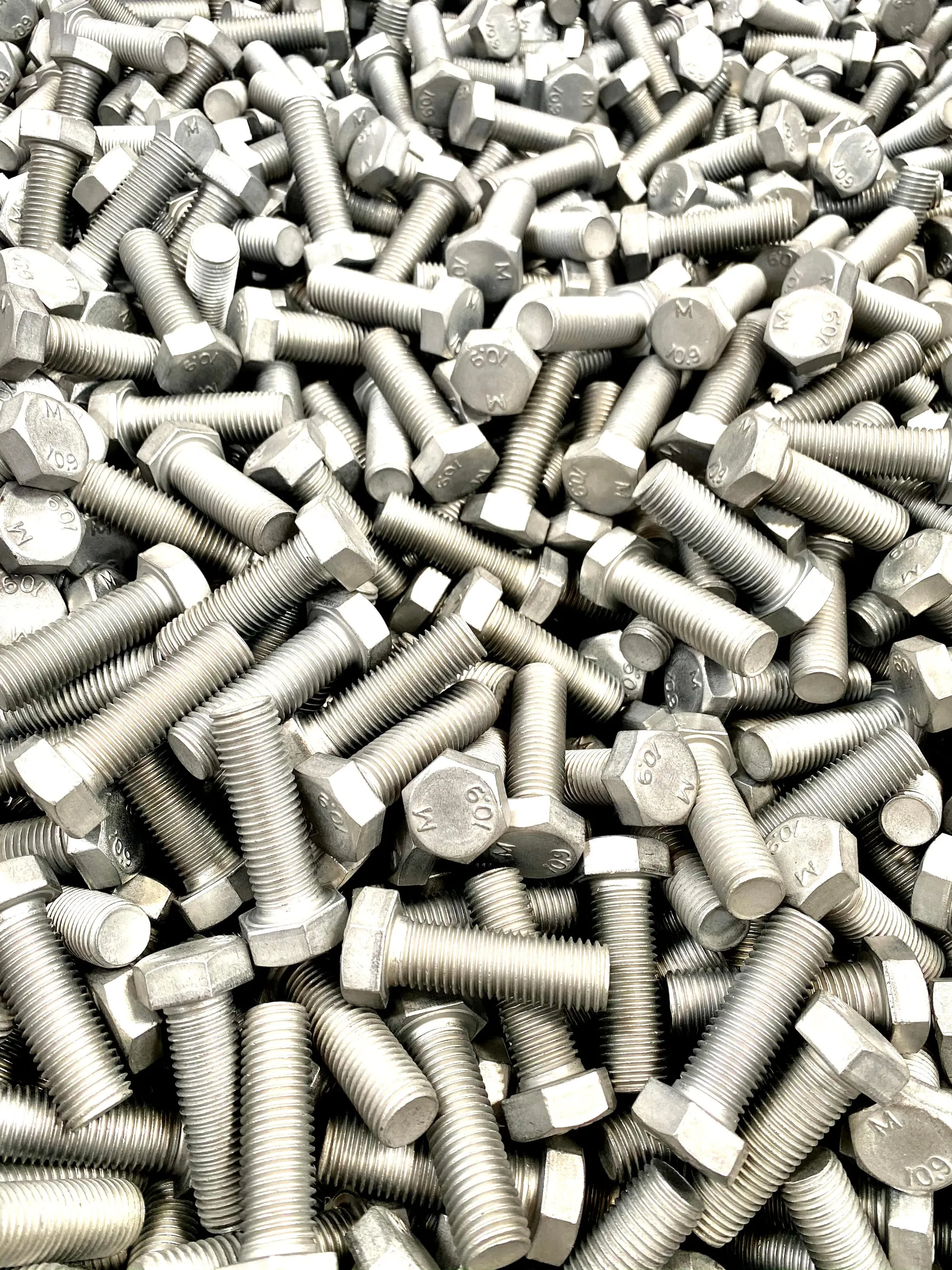
White trivalent zinc-nickel
The most requested finish in the line: white trivalent passivation, free of hexavalent chromium, with 1,000 hours of salt spray and the test report sent on request.
Trivalent passivation replaced hexavalent chromium by legal requirement — in the European automotive sector it was phased out completely on 1 July 2007 — without losing protection. With a sealer, the system holds 1,000 hours to red rust.
The alloy decides the result: outside the 12 to 16% nickel range set by ISO 4042, the coating looks compliant and fails in the field. That is why we measure the alloy by X-ray during the process, not only at final inspection.
Technical data
- Passivation
- White trivalent (Cr³⁺)
- Alloy
- 12 to 16% nickel
- Salt spray
- 1,000 h · with sealer
- Class
- ASTM B841 cl. 1 and 2 · grade 10 · B+E
- Equipment
- Rotating barrel and rack
What each standard sets for White trivalent zinc-nickel.
| Standard | What it covers | What it sets here |
|---|---|---|
| ASTM B841 | Coating specification | Classes 1 and 2, grade 10, type B+E — the complete designation of this finish. |
| ISO 4042:2022 | Fastener coating | Sets the 12 to 16% nickel alloy and the trivalent passivation classes. |
| DIN 50979 | Automotive system | The umbrella standard of the European automotive sector for zinc alloy with passivation and sealer — the one an OEM specification usually refers to. |
| ISO 15726 | Electrodeposited zinc alloy | Requirements for zinc-nickel alloy on iron and steel. |
| ASTM B117 | Test method | Neutral salt spray — the method behind the published 1,000 h. |
The applications that come here.
Automotive supply chain
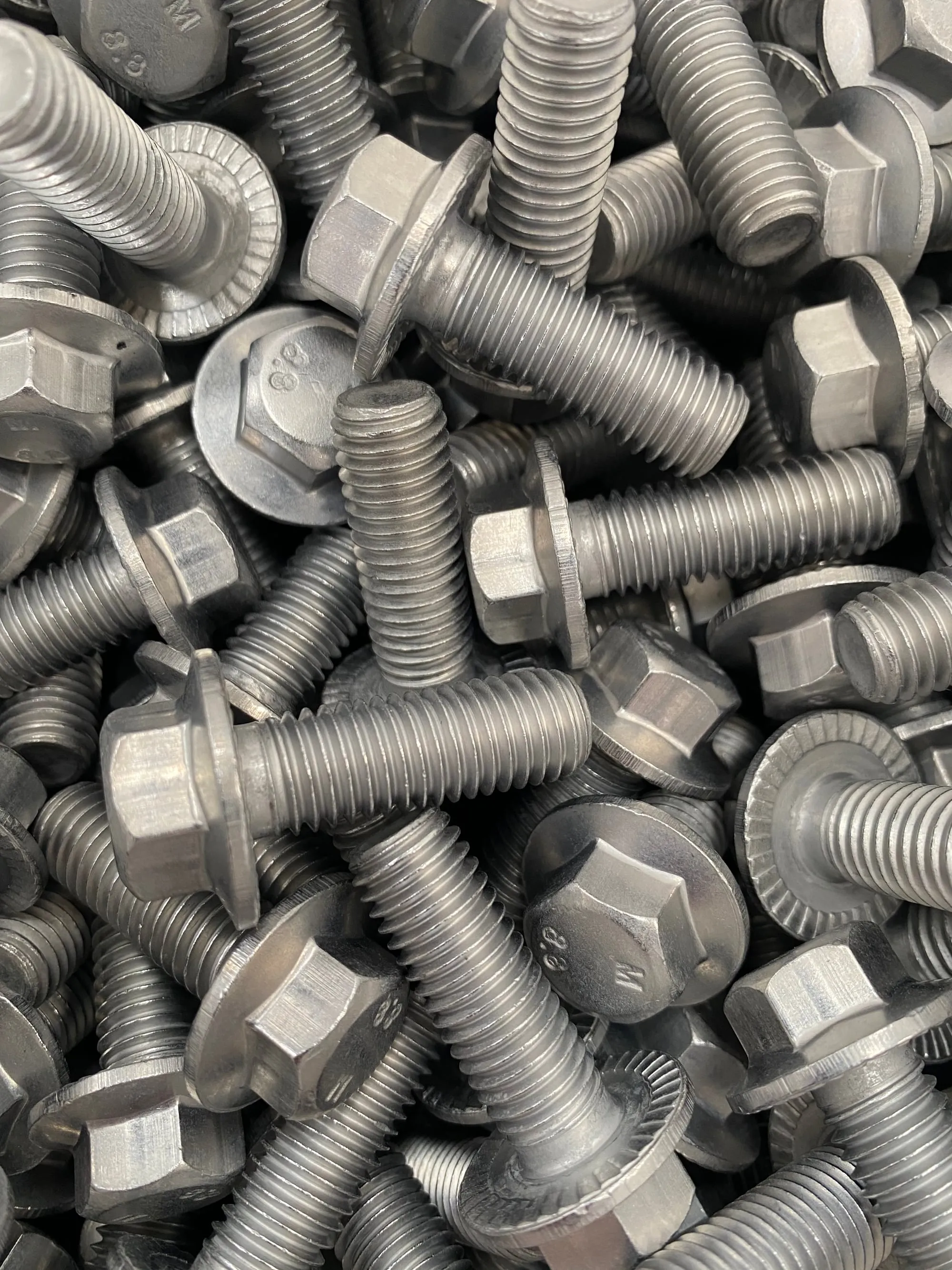
Chassis, suspension and engine fasteners. We meet OEM specifications — among them Volkswagen, Stellantis, Peugeot, Citroën, General Motors, Renault, Nissan and Fiat (PS50031).
PPAP-controlled process
Production part approval with the dossier the supply chain requires: control plan, capability study and a record of the alloy measured by X-ray.
Structure exposed to weather
Solar energy and infrastructure components, in continuous exposure.
System base
As the metallic layer under an organic finish, when the specification calls for galvanic protection and a chemical barrier on the same component.
What specifiers usually ask.
Why did trivalent passivation replace hexavalent?
By legal requirement. Hexavalent chromium is a recognized carcinogen, and the European automotive sector phased it out on 1 July 2007. With a sealer, trivalent reaches equivalent or better performance — the change did not cost protection.
What does ASTM B841 class 2, grade 10, type B+E mean?
Class and grade define the minimum coating thickness; the type defines the passivation finish. It is the designation the drawing should carry so the supplier delivers exactly the same coating — asking for "white zinc-nickel" without the designation leaves thickness and passivation open.
How do I know the alloy delivered is in the right range?
By the record of X-ray fluorescence measurements taken in process, not only at final inspection. Since an out-of-range alloy changes neither color, gloss nor thickness, the only way to know is to measure — and the only way to prove it is the record.