
Xylan 1070
The Xylan line with a complete, verified specification: measured friction, a wide thermal range and use as a top coat over zinc-nickel.
It is the Xylan we use as the top layer in the combined system: zinc-nickel underneath, Xylan 1070 on top. The metallic layer protects by sacrifice, the organic one forms a barrier and controls friction. On a base of 8 to 15 µm with a 16 µm top coat, the assembly sits above 3,500 hours in ASTM B117 testing — the level of the zinc-nickel combined-system family.
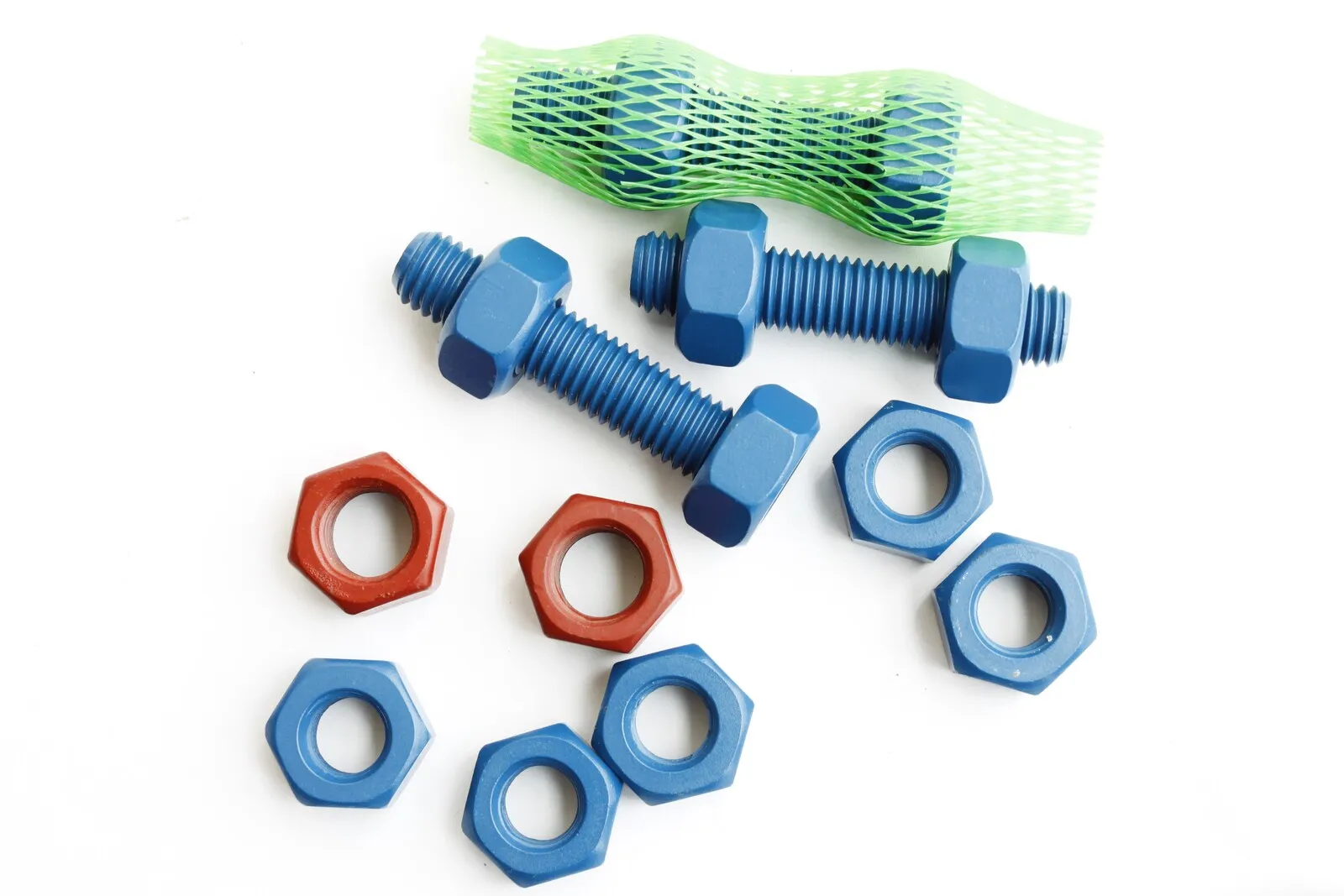
Typical application: stud fasteners, valve systems and other threaded components, where predictable torque matters as much as protection.
Sapucaia is a PPG (Whitford) approved applicator of Xylan.
Technical data
- Chemistry
- Fluoropolymer
- Application
- Spray
- Layer
- 15 to 25 µm
- Service temperature
- −195 °C to +260 °C
- Static friction
- 0.124 · ASTM G99
- Dynamic friction
- 0.047 · ASTM G99
- Combined system
- Zn-Ni + Xylan® 1070 · > 3,500 h · ASTM B117
Manufacturer data sheet
manufacturer data — data sheet for Xylan® 1070, not a Sapucaia test
- Type
- Solvent-based fluoropolymer
- Working range
- −195 °C to 260 °C
- Applied thickness
- 16 µm in the system with zinc-nickel
- Typical line thickness
- up to 25 µm
The applications that come here.
Flange studs and stud bolts
Where seizing is as much a problem as corrosion: the film keeps torque predictable at assembly and allows disassembly at the planned shutdown.
Valve systems
Threaded component in cryogenic or high-temperature service, thanks to the wide range.
Top coat over metallic
A 16 µm layer over an 8 to 15 µm zinc-nickel base — the system that sits above 3,500 h in ASTM B117.
What specifiers usually ask.
Why apply Xylan® 1070 over zinc-nickel instead of on its own?
Because the two layers protect in different, complementary ways. The fluoropolymer is a barrier: it protects while the film is intact. Zinc-nickel is sacrificial galvanic protection, which keeps acting at a point where the layer was damaged by assembly or impact.
What is the 1070 temperature range?
From −195 °C to 260 °C — the widest of the line applied here, which makes it the choice for cryogenic service and for high temperature. It is data from the coating manufacturer’s datasheet.
How much does the 1070 reduce friction?
The static coefficient is 0.124 and the dynamic one 0.047, measured to ASTM G99. In a threaded joint, that is what makes tightening torque predictable — and predictable friction is what the designer uses to reach the preload.