
Oil and gas
ASTM B633: the edition of the standard is part of the specification
Two BSEE reports describe the same mechanism: the coating was in the standard, but in the old edition. The failure was not the bath — it was a link nobody audited.
20 September 2026 · Equipe Sapucaia
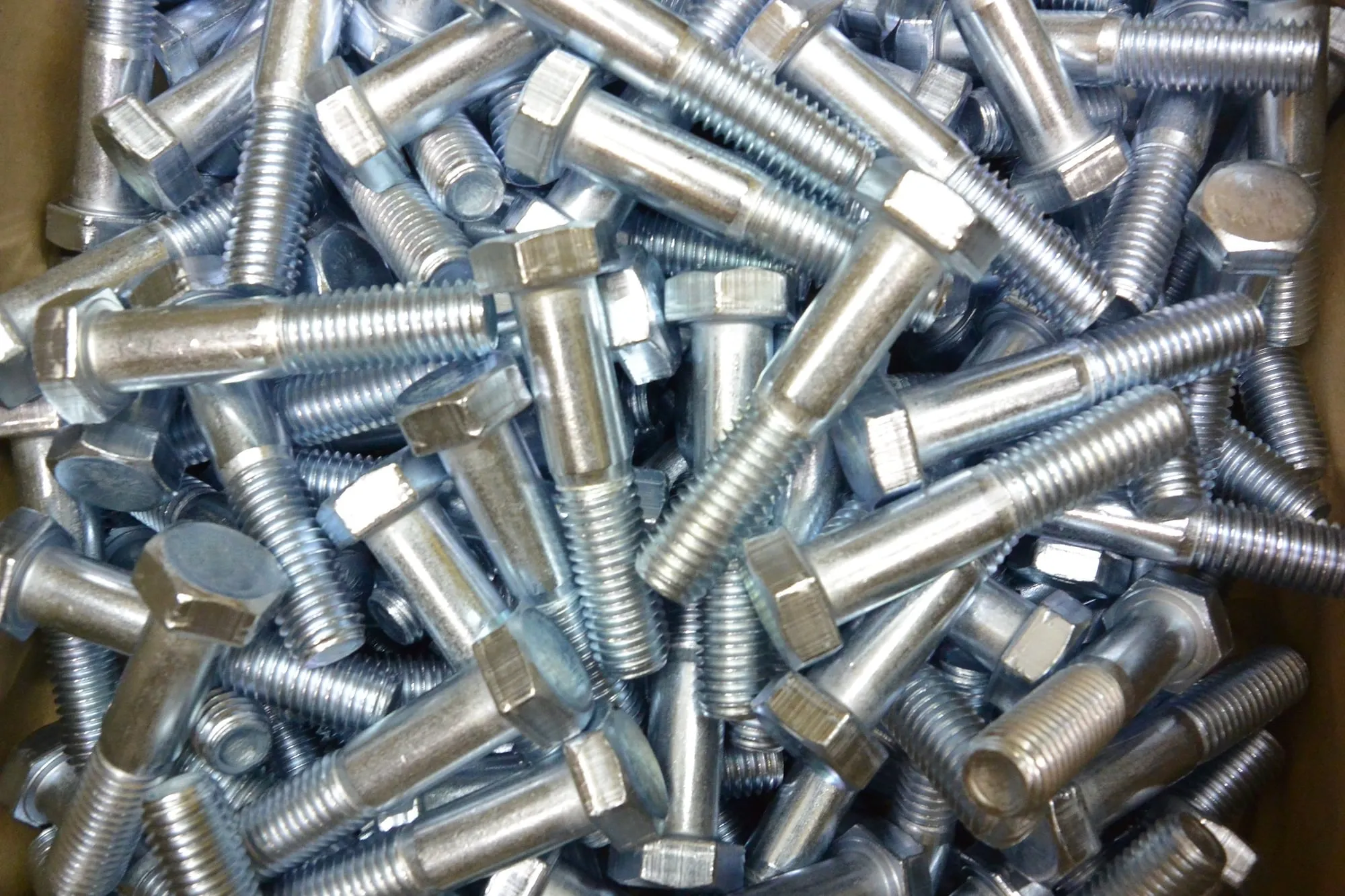
A coating specification has four fields that everybody checks: the standard, the class, the type and the thickness. There is a fifth that almost nobody checks, and it is the one that shows up in the two cases below: the edition of the standard.
What the regulator documented
In December 2012, in the Gulf of Mexico, the 36 bolts of the connector that holds the riser package to the BOP broke. The assembly separated. The root cause established by BSEE — the US offshore regulator — was hydrogen embrittlement.
The chain of error, as the report describes it:
| Link | What happened |
|---|---|
| Design | the bolts were specified to ASTM B633 class SC 2 |
| What SC 2 is | the standard itself describes moderate service, predominantly indoor environment |
| Where they were used | subsea BOP connector |
| Application | the coating was applied to the 1998 edition of ASTM B633 |
| What was missing | the post-plating hydrogen-relief bake, which the 2007 edition began to require for high-strength steel |
| Why nobody saw it | the quality system audited only the first-tier supplier |
The result was a global recall and thousands of bolts replaced across hundreds of connectors.
In 2015, fasteners of another BOP’s shear ram failed, and BSEE’s 2017 report describes the same mechanism, with a different manufacturer: also the 1998 edition of ASTM B633, also a post-plating bake too short for the hydrogen to leave. Safety Alert No. 318 records that the episodes involved equipment from the three main manufacturers in the sector — and concludes that the problem is systemic, not one supplier’s.
The National Academies report (2018), commissioned by the US Department of the Interior, adds the observation that closes the picture: in the cases analysed, the coating was missing exactly where the fractures occurred.
What this is not
It is not a case of counterfeit parts. BSEE investigated that hypothesis in 2012 and dismissed it in writing: the bolts came from the manufacturer itself.
And that is why the case is hard. The supplier was legitimate, certified and audited. It applied a coating that was in the specified standard. What changed was the edition — and the edition is the part of the specification that does not appear on the invoice, on the material certificate or on the drawing.
The link the equipment buyer cannot verify
Whoever designs a manifold, a Christmas tree, a connector, a BOP or a valve audits the first-tier supplier. The coating is almost always applied at the second or third tier — contracted by another buyer, under another specification, by a company the product engineer has never visited.
That is the link. And it is not solved with one more clause in the contract: it is solved with an applicator that publishes what it does and delivers the record with the part.
What Sapucaia delivers at this point
| What the case showed was missing | What enters the scope |
|---|---|
| Edition of the standard not checked | The standard, class, type and grade come from your order and go back written in the report |
| Hydrogen relief absent or insufficient | Hydrogen embrittlement relief in a calibrated oven, from 150 °C to 250 °C, to API 6A, with a temperature-uniformity survey — and ASTM B849 before plating, ASTM B850 after, when the specification asks |
| Coating not verified at receiving | X-ray coating measurement, with a report — including for third-party parts |
| Class undersized for the environment | The choice of system with our sales team, against the asset and the medium, not against the catalogue |
And the four base standards that oil and gas specifications ask for are the ones we apply: ASTM B633 on zinc, ASTM B841 on zinc-nickel, ASTM B766 on cadmium and the fluoropolymer in PTFE Sapucaia and in Xylan®.
When the environment is more severe than zinc can handle, the path is to move up a system, not to add thickness: NanoGalv® — nanostructured zinc-nickel to the ASTM B1025-25 specification — records over 10,000 hours to red rust from 10 µm, in Modumetal testing under the ASTM B117 method.
What to take from this
The edition of the standard is part of the specification. Write it in the order, next to the class and the type — and ask for the application report that proves which one was used.
Have a critical component and want to know which system the asset calls for? Send the technical drawing and your end customer’s coating standard. Our sales team comes back with system, class and thickness.